

How do you know which repairs make you money?
To know which repairs make you money, you need three numbers on every order: what you charged, what you paid for parts and how long it took you. The day's total is not enough, because two orders at the same price can leave very different profits.
You do not need bookkeeping. You need to write down three things per order and sit with them once a month.

Why doesn't the day's total tell you whether you earned?
Because the total adds up what came in and says nothing about what went out. A day with a thousand in the register, eight hundred of it spent on parts, is nothing like another thousand that was almost all your own labor.
The total does not count hours either. Three quick repairs and one that ate your whole afternoon enter the register as a single figure, and they did not weigh the same in your week.
So the useful question is not how much the shop billed, but which kind of work is still worth something once parts and hours are taken out.
Which three numbers do you need per order?
What you charged, what the parts cost you and how long that order was in your hands. With those three, the rest follows.
You already have the first one: the price of each unit and the total go on the delivery slip, which is what a well-made repair slip should carry. You know the second one when you buy the part. The third is the one almost nobody writes down, and it is the one that decides the most.
Writing down all three takes less than a minute per order. Not writing them down costs you years of not knowing which part of your work is holding up the shop.
How do you record what the part cost you?
At the moment you buy it, next to the order number. If you wait until the end of the month, you will no longer remember which part went into which unit.
The trick is to write the part and the order on the same line, not the part alone. A box of parts with no owner is an expense that shows up in the shop's accounts instead of in the account of the repair that caused it.
Count what you over-bought as well: the part you ordered, that did not fit, and that stayed on the shelf. That one came out of your pocket too.
How do you measure time without carrying a stopwatch?
With two dates and a rough band. You do not need exact minutes: you need to know whether a repair was settled in one sitting, in two or in five.
The simplest thing that works is to note, when you close the order, whether the job was short, medium or long for you. Over three months that rough mark will separate your types of equipment far better than any fine calculation you are never going to run.
Shop time, besides, is not only screwdriver time. It is the phone call, the wait for the part, the second diagnosis and the two minutes it takes you to explain the same thing as always over the phone.
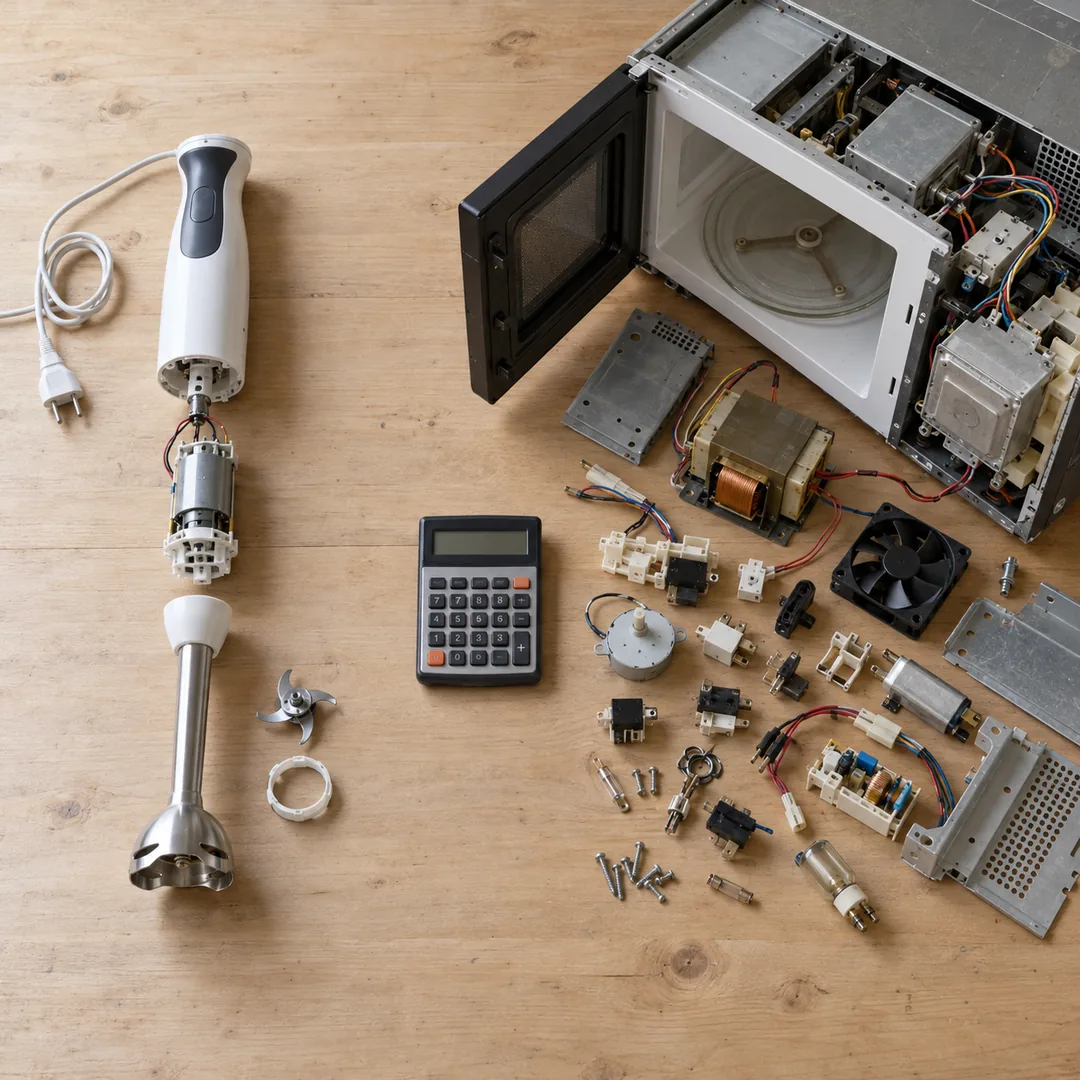
What price do you quote when you still don't know what's wrong?
An estimated cost and an authorized ceiling. The intake slip carries the estimated cost on purpose: it is a reference, not a closed promise.
What prevents the argument at payment time is writing down how far the work may go before you have to check with the customer again, and what happens if the unit cannot be fixed. Agreed at the counter, the final number surprises nobody.
Charging or not charging for the inspection is a condition of your shop, and both choices are legitimate. What does not work is never having decided.
What about the units you inspect and don't repair?
Those consume time and almost never leave anything. A unit that comes in, gets opened, gets diagnosed and goes back as it was took up your bench exactly like a repaired one.
If two out of every ten units of one kind end up repaired, that kind is not a line of work: it is free advice shaped like a repair. Knowing it does not force you to turn them away; it forces you to decide what you charge for looking.
On the delivery slip Paradoxon Assistant ships with, units that leave repaired, units that leave under warranty, units that are not repairable and units that came back are each counted separately. That separation is exactly what lets you see the proportion.
What does a unit that comes back cost you?
Twice the time and no new income. A unit that returns gets repaired again, takes the bench again and does not enter the register again.
That is why it pays to count how many units come back to you and what kind they are. A rework repeated on the same model almost always points to a cheap part from a weak supplier, and that part is costing you dearly.
When an order that was already closed is reopened, asking whether this is warranty or rework is the same as asking who pays. Answering it unit by unit is what lets you add it up later.
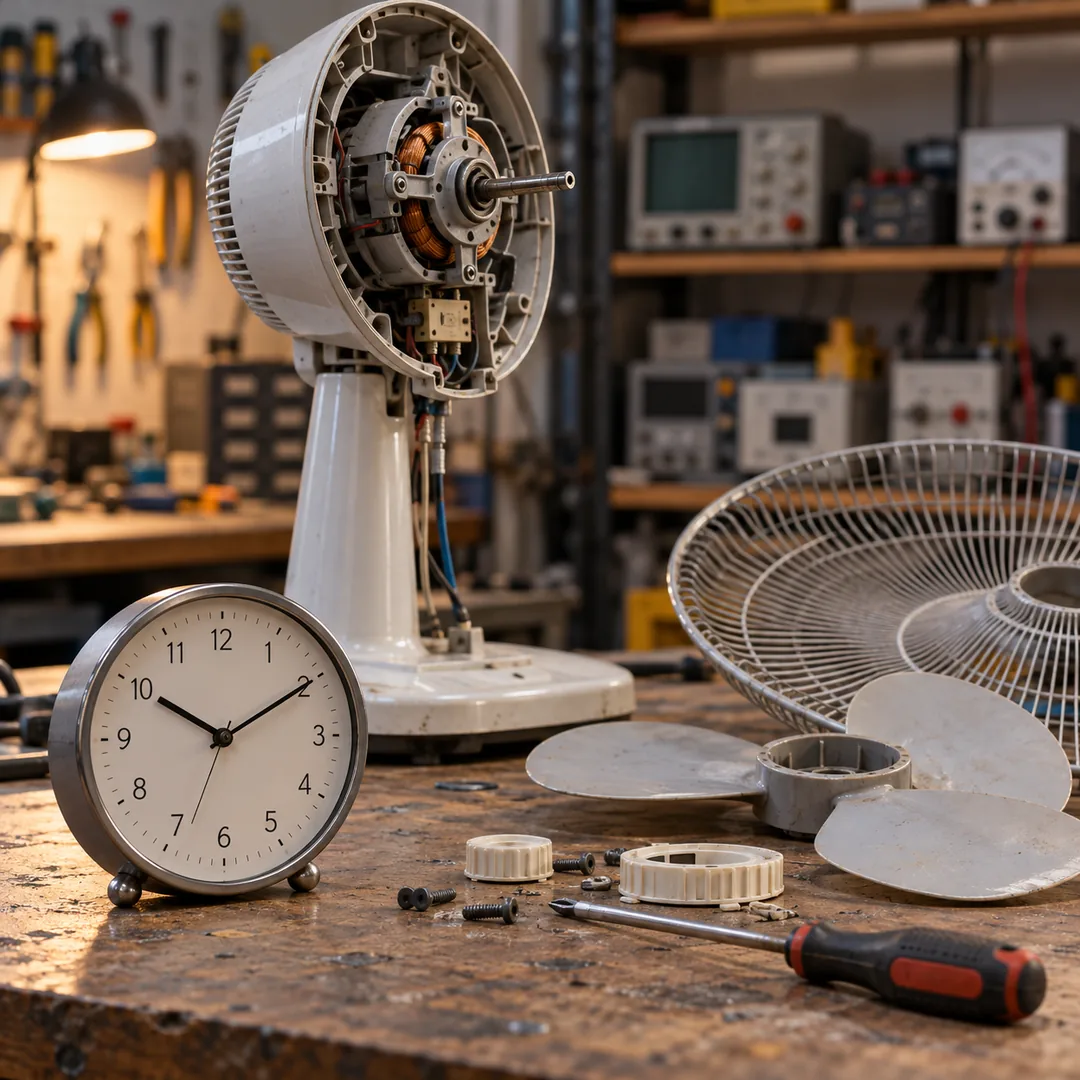
What eats your profit without you seeing it?
Whatever was left half done. A quote you gave and nobody answered is work you already did and have not been paid for, and an order that sits still is space taken up with nothing in return.
The finished unit nobody picks up weighs the same: you repaired it, it occupies your shelf and your money is still out of your hands. Notifying on time is not courtesy, it is getting paid sooner.
And then there is paperwork. The time that goes into hunting for details and redoing a receipt does not show up on any order, but it comes out of the same hours; that is what production for the technician working alone is about.
How do you compare two kinds of repair with what you already wrote down?
By grouping by type of equipment and looking at four things together: how many came in, how many were repaired, how much was charged on average and how many came back. Nothing more is needed.
With that on the table, the kinds of work sort themselves out. There is almost always a surprise: a unit you thought was good comes back a lot, and another you took for small change is repaired fast, with barely any parts, and never returns.
What passes through your shop over the months tells you which repairs keep repeating, and that is where you see where your work really comes from.
Three months of numbers, and a decision
Start tomorrow with the cheap part: on every order, the price, the cost of the part and whether the job was short, medium or long. In three months you will have what you need to decide which work you go after, which you price differently and which you let go. That is what Paradoxon Assistant keeps in order: every unit with its order, its price and its total on the delivery slip, and on that same slip the count of what left repaired, what left under warranty, what was not repairable and what came back, and the mark on a returning unit with the number of the order it came from. Your shop supplies the numbers; the decision is yours. The download is free.